AI Isn’t Just Changing How Wine Is Found. It’s Changing What Gets Made and What Sells.
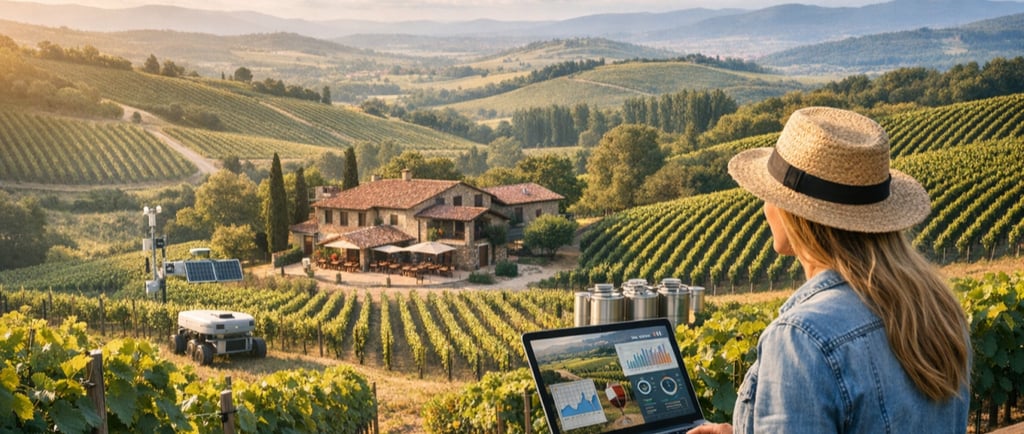
Back in the olden days, before AI became the latest bandwagon everyone thought was coming for their jobs, there was a much quieter movement happening in the wine industry, led by a small group of early pioneers. And when I say “pioneers,” I don’t mean Davy Crockett with a .40-caliber flintlock rifle he named "Old Betsy." I’m talking about the ones in large champagne houses and academic labs, already exploring the power of data back in the early 2000s.
Cut to today, and AI is quickly becoming a critical driver of marketing, sales, and customer experience. And that’s where its impact is being felt most immediately.
Most of the current conversation is focused on AI-driven discovery. And for good reason. Wineries are already seeing how platforms like ChatGPT and Google AI are influencing where people go, what they buy, and which wine clubs they join.
If you’re not showing up in those answers, you’re not in the running. But it’s only part of the story.
The Shift No One Is Talking About
Most of the conversation around AI in the wine industry has focused on production—vineyard analytics, fermentation monitoring, and predictive yields. While those advances are important, they’re not where the biggest shift is happening.
The real shift is in sales. More specifically, it’s happening in how wineries understand customer preferences, how that insight feeds back into product decisions, and how those wines are ultimately discovered.
Traditionally, the model was straightforward. A winemaker created the wine based on experience, instinct, and style. The winery told the story. The customer decided whether they liked it. Feedback loops were slow and often anecdotal, relying on tasting room conversations, sales trends, or distributor input over time.
That model is evolving.
Platforms like Tastry are introducing a new layer of visibility by combining chemical analysis of wine with large-scale consumer preference data. Instead of relying solely on subjective feedback, wineries can now see patterns at scale—what resonates, what doesn’t, and where a wine might over- or under-index for certain audiences.
Used right, this type of insight doesn’t replace the winemaker’s instinct. It sharpens it, offering a clearer picture of how different profiles are likely to perform in the market.
But there’s an important distinction that isn’t being discussed enough. AI is not necessarily helping wineries "make better wine." It’s helping them make wine that is more likely to be liked and purchased. Those two things can overlap, but they are not always the same.
When preference data becomes part of the sales and marketing process, the feedback loop changes. Winemakers are no longer creating in isolation. They are working with a level of insight into customer behavior that simply didn’t exist before. That creates an opportunity—but it also introduces tension.
If every decision is optimized around what performs best, there is a risk of drifting toward predictability at the expense of identity. The wineries that navigate this well will use data to inform decisions without allowing it to define who they are—their tradition, legacy, and roots.
Even then, creating the right wine, one your customers love, served in a beautiful tasting room with excellent service is only part of the equation.
It still has to be found.
Now Layer in Visibility
Even if you create the right wine for the right customer, it still has to be found. AI platforms don’t return search results; they generate answers. This is where Generative Engine Optimization (GEO) comes in.
AI platforms like ChatGPT, Perplexity, Claude, Gemini, and Google AI pull from your website, content, third-party presence, and your authority signals, then decide whether to include you.
That means your sales, tasting room visits, and wine club memberships are now influenced by two things working together: what you make and whether you show up.
Most wineries are starting to think about one or the other. Very few are thinking about both at the same time.
The Third Layer No One Wants to Deal With: AI Policy
Everything we’re talking about runs on data—customer preferences, wine composition, inventory, and behavior. That data is moving across systems, feeding AI tools, and being stored and interpreted in ways most teams don’t fully see.
Without clear guardrails around what goes into AI, how that data is handled, who has access, and where it’s going, you’re not just creating opportunity. You’re creating unwanted exposure. And right now, most wineries are using AI without a defined policy.
With Commerce7's (C7) recent purchase of WineDirect's SaaS division, AI is becoming a key focus of C7's offerings. According to the acquisition announcement, C7 is now "doubling down on innovations like artificial intelligence and machine learning to push our tools even further for e-commerce, wine clubs, and tasting room management. Expect smarter features, faster updates, and solutions designed to grow with your winery."
This 'doubling down' means your customer data is now actively powering AI-driven decisions across sales, marketing, and operations, so you need clear policies on how that data is used, who controls those decisions, and where the boundaries are.
And, if you ship any of your SKUs to Tastry, an outside third party for AI analysis, you're also sharing access to proprietary information and intellectual property, including secret blends (non-disclosed grape varieties), specific yeast strains, or specific aging processes.
What This Shift Means for Sales
This convergence of product decisions, AI-driven discovery, and data management is where everything comes together. Sales is no longer just influenced by product quality, brand story, and distribution. It’s influenced by how well your product aligns with customer preference data, whether your brand is surfaced in AI-driven discovery, and how intentionally you manage the systems and data behind both. That’s a very different model than even five years ago.
The Wineries That Win
The wineries that win won’t be the ones using the most AI. They’ll be the ones using it intentionally. They’ll use data to make informed decisions without losing their identity, structure their content so they show up when it matters, and put guardrails in place to protect their data and brand.
Because at this point, it’s not just about making great wine. It’s about making the right wine, getting it in front of the right people, and managing the systems that make both possible.
If you’re not sure whether your winery is showing up in AI search—or where you stand—I put together a quick 2-minute audit you can run here: https://kellyleereeves.com/geo-visibility-quiz
LET'S CONNECT!
Contact
Join my email list to stay updated on the latest news, receive exclusive offers, or get access to profit-building content.
hello@kellyreeves.com
+1-805-539-2333
© 2026. KLR Communications, LLC All rights reserved.
AI transparency disclaimer: Some content and images on this website were edited or enhanced with the assistance of AI. The strategies, experience, perspectives, and client results I share are my own professional expertise based on 25+ years of real-world experience.